Free access brings control and personalization to Generative AI workflows
Davant Systems announces the beta software release of Davant Studio, an innovative AI-powered imaging solution that dynamically transforms video and still images into alternate looks. This creative inspiration engine has a wide range of applications for previsualization, content creation, and experiential marketing.
Davant Systems’ President, Grant Keller, states, “In today’s world, creative expression and audience engagement are more important than ever. Ubiquitous image capture and editing tools have raised the stakes from social media to filmmaking. Davant Studio empowers creators to produce AI-generated imagery inspired by their physical environments.”
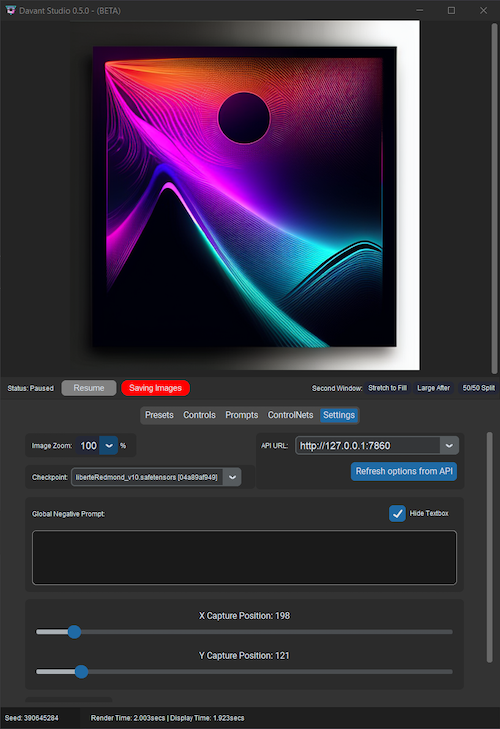
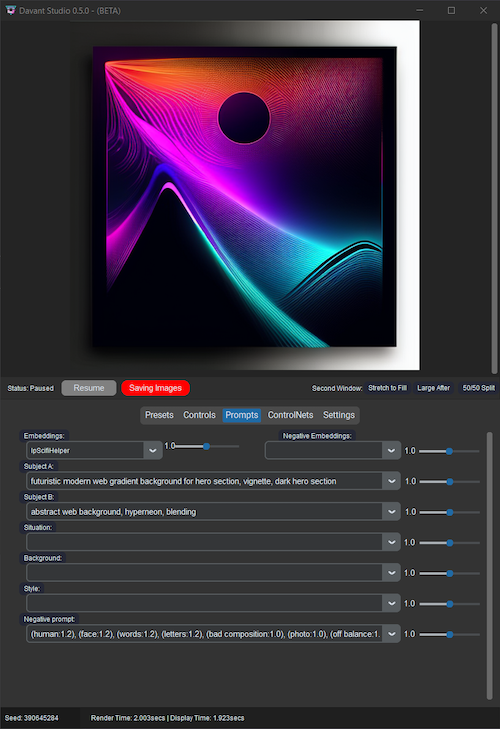
Built upon the open-source Stable Diffusion engine, Davant Studio enables real-time video and still camera feeds to be used as prompt inputs for generative AI workflows. Users can connect cameras to their computers to transform shots of actors, props, and sets into AI-generated images of cartoon worlds, alien avatars, futuristic societies, and more. The Davant Studio interface has intuitive settings for balancing prompt strength, imagination strength and seed selection, as well as to save presets.
Previously recorded images, screenshots, and even whole folders of images can also be used as inputs. Because Davant Studio operates on top of the user’s local instance of Stable Diffusion, no internet connection is required to perform transformations. Both the before and the after images remain on the user’s computer.
Keller and Davant Systems’ Technical Director, David Shorey, have been previewing their solution since late 2022 at dozens of tradeshows and creator conferences, receiving positive reactions and feedback that has been incorporated into this beta release. An early use case for the software was an AI-powered interactive photo booth for experiential marketing events. But Shorey, a visual effects artist, photographer and pioneer in 3D printing, was compelled to develop Davant Studio to bolster his own artistic endeavors. Shorey often performs public demos showing how physical art objects, such as sculptures, can be input to Davant Studio through a camera feed and digitally transformed into a variety of concepts.
“The application of this workflow in filmed entertainment is wide-ranging,” says Andrew Cochrane, an immersive content creator and early user of Davant Studio. “My team was asked to produce a four-minute anime video for background visuals during a live concert performance, on just a month’s timeline. Using our experience in physical production, we were able to direct actors and compose shots in a familiar way. As the frames were transformed into anime stills by the Davant software, the talent and crew could see the results and adjust their takes. It was like the actors were puppeteering a 2D image sequence with their own bodies.”

Keller adds that creative exploration was the goal for Davant Studio. “We’ve shown the software to previz artists, architectural designers, social media influencers, marketers, and producers. They always have that a-ha moment about how they’ll incorporate this tool into future projects. It’s inspiring to see all types of creators get excited about AI. We can’t wait to see what they come up with using the Davant Studio beta.”
Davant Studio currently supports Windows OS 10 and 11, with Mac and Linux OS support coming soon. The beta testing period is scheduled to end on February 17, 2024. To download the free beta software*, visit www.davantsystems.com.
*Davant Studio requires additional installation of third-party Automatic 1111 WebGUI for Stable Diffusion and the ControlNet Extension. Configuration instructions and hardware requirements are available at www.davantsystems.com.